 TimeMeal
Structured Meal Timing Approaches
Educational article | February 2026
Understanding Structured Eating Patterns
Structured meal timing refers to consistent patterns of food consumption throughout the day. Rather than eating randomly, individuals following structured approaches plan specific times for meals and potentially snacks. These patterns vary widely depending on personal preferences, work schedules, cultural factors, and lifestyle circumstances.
The concept of structure in eating is not new. Throughout history and across cultures, societies have developed regular meal patterns aligned with daily work cycles, environmental factors, and social conventions.
Common Structured Approaches
Various approaches to structured meal timing exist. Understanding different patterns helps illustrate the diversity of eating schedules:
Three-Meal Pattern
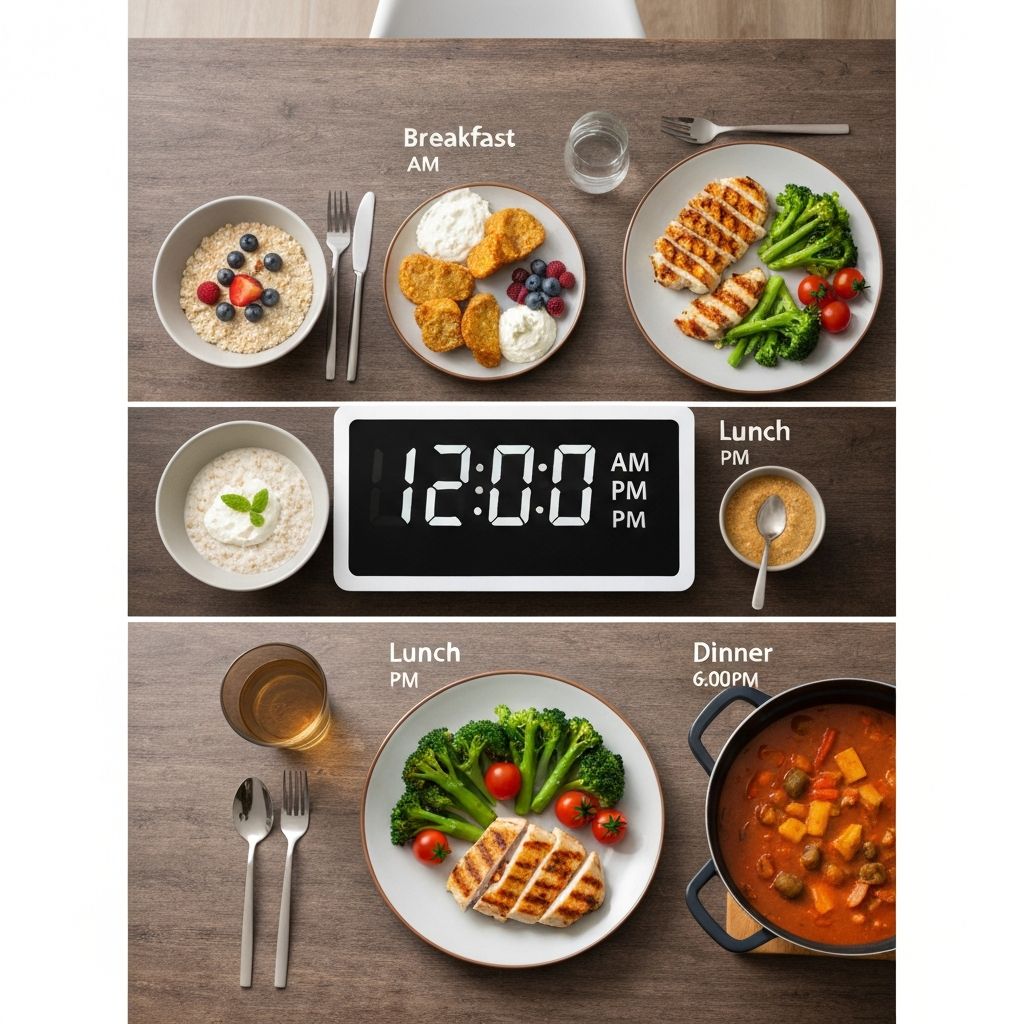
The most common structured approach in many Western cultures involves three main meals: breakfast, lunch, and dinner. This pattern typically aligns with standard work hours and daily routines. Breakfast typically occurs in the morning, lunch around midday, and dinner in the evening. The spacing between meals provides regular intervals for food consumption.
Meal and Snack Pattern
Some individuals incorporate planned snacks between main meals. This might include a mid-morning snack, afternoon snack, or both. This approach provides more frequent eating occasions while maintaining predictability through scheduling.
Intermittent Meal Timing
Other structured approaches involve intentional gaps between eating occasions. Different approaches vary in the duration and frequency of these patterns, reflecting diverse philosophies about meal spacing.
Work Schedule Influences
Work environments significantly shape meal timing structure. Office workers often follow consistent schedules with midday meal breaks. Shift workers adjust their eating patterns to their work shifts. Self-employed individuals enjoy flexibility in timing. Agricultural workers may follow seasonal and work-intensity patterns. These variations demonstrate how real-world circumstances influence meal structure.
Information About Consistency
Research examines whether consistency in meal timing relates to various aspects of daily functioning. Some findings suggest that regular meal timing may support energy stability and digestive regularity. However, individual responses vary considerably, and consistency matters in different ways for different people.
Practical Implementation
Individuals interested in structured meal timing consider factors such as:
- Personal work and activity schedule
- Family or household meal patterns
- Sleep and wake times
- Exercise and activity timing
- Social and cultural eating patterns
- Personal appetite and preference timing
Individual Variation
No single structured approach suits everyone. What works depends on individual circumstances and preferences. The structure that supports one person's daily functioning may not work equally well for another. Flexibility in approach acknowledges this diversity.
Key Takeaways
Structured meal timing represents consistent patterns of food consumption. Various approaches exist, from traditional three-meal patterns to other structured frameworks. Work schedules and daily routines significantly influence feasible meal timing structures. Individual variation means different structures work for different people. This information is educational in nature and not personalized guidance.